

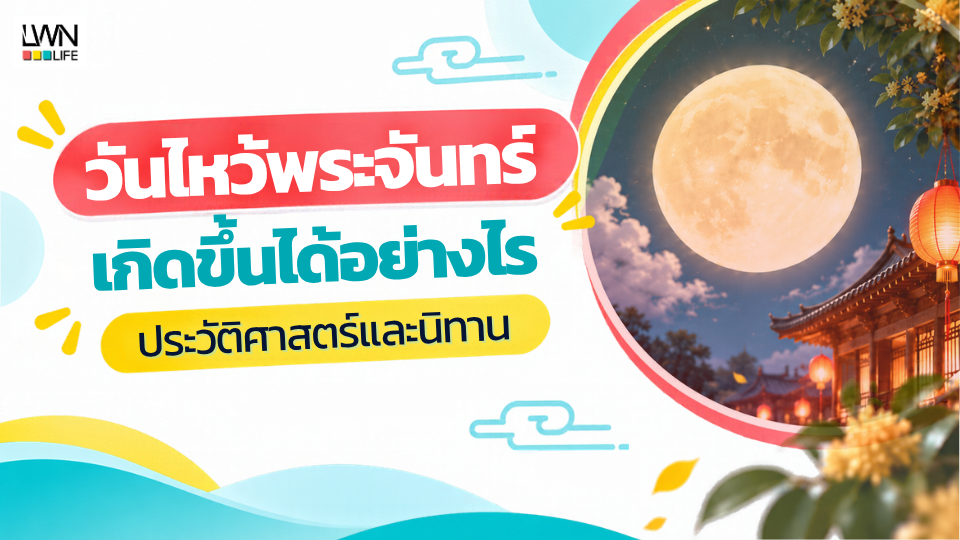
How the Mid-Autumn Festival originated is a story full of history and legend. The Mid-Autumn Festival is a traditional Chinese celebration that is commonly traced back to the Han Dynasty. It takes place on the night of the full moon on the 15th day of the 8th lunar month, and it celebrates the harvest with mooncakes, family gatherings, and moon viewing.

Table of Contents
How the Mid-Autumn Festival Originated: The Legend of Chang’e
The best-known story is the legend of Chang’e and Hou Yi. Long ago, ten suns rose in the sky and scorched the earth, causing great suffering. Hou Yi, a skilled archer, shot down nine of the suns and left only one. As a reward, he received an elixir of immortality, but instead of drinking it, he gave it to his wife, Chang’e, for safekeeping.
One day, while Hou Yi was away, one of his students tried to steal the elixir and threatened Chang’e. To protect it, she swallowed the elixir herself. Her body became light, she floated up to the sky, and she settled on the moon, separated from her husband forever.
Moved by her loyalty and sacrifice, people began offering prayers to the moon on the night of the 15th day of the 8th lunar month. The custom has been passed down to this day.
The Mooncake Uprising Folk Tale
Another popular tale is set at the end of the Yuan Dynasty, when China was ruled by the Mongols. According to the story, Zhu Yuanzhang, a member of the Red Turban rebels who came from a farming family, came up with a clever plan: hide secret messages inside mooncakes and hand them out to the people, calling for an uprising on the day of the festival.
In the story, the guards saw mooncakes as an ordinary festive snack and paid them no attention, so the uprising succeeded. Zhu Yuanzhang later founded the Ming Dynasty and became the Hongwu Emperor. Historians still debate how much of this tale is true, so it is best seen as folklore rather than recorded fact.
Traditional Mid-Autumn Customs
- Moon viewing: families gather outdoors to admire the full moon together.
- Eating mooncakes: the round shape symbolizes completeness and reunion.
- Moon worship: offerings are made to give thanks for the harvest and pray for good fortune.
- Carrying lanterns: children carry colorful lanterns, adding to the festive atmosphere.
- Family reunions: relatives travel home to share a meal under the full moon.
How the Festival Is Celebrated in Thailand
In Thailand, the festival is widely celebrated by Thai-Chinese communities, where it is known as the Moon Festival. Families set up tables with mooncakes, fruits, and flowers as offerings to the moon, and many shops and markets sell mooncakes in the weeks before the full moon.
Mooncakes come in many flavors today. Traditional fillings include lotus seed paste, red bean, and salted egg yolk, while modern bakeries offer durian, green tea, chocolate, and even ice cream versions. Many families buy beautifully boxed mooncakes to give to relatives, friends, customers, and business partners as a sign of respect and good wishes for the season ahead.
To learn more about the history of the festival, see the Mid-Autumn Festival article on Wikipedia.
Happy Mid-Autumn Festival from LWNLife
Whichever story you prefer about how the Mid-Autumn Festival originated, LWNLife wishes you and your family a happy Mid-Autumn Festival and a joyful reunion. If you are preparing your home or business for the season, explore our storage boxes, crates, and household products in our online shop.